ᐯ
/ selected works
she is mine and and i am herthe only body that can hold our world’s grief
optics of a rising sun
bitter flight
current sea
the green screen line
millenary witness
her in sight
how do you sleep at night
olive leaves memories
eternal witness
home shell
grounding elisar
gated oasis
shattered light
shattered horizon
folds unfolding
balconies of beirut
this sea is mine
thought-books
/ photo
border wallbitter flight
tranquil tragedy
mourning dusk
and then we rose
rose portraits
here
/films
/ about
︎ tamaras.kalo@gmail.com
she is mine and i am her
2026


She Is Mine and I Am Her is a photograph produced using a camera obscura Kalo made inside a vacant seaside building in Saida, Lebanon. Capturing the landscape beyond the lens -- the palm-lined streets of the corniche overlooking the sea -- the image, projected inward, is overlaid with the shadow of the artist’s body. Her silhouette blends into the scene, suggesting that identity is not fixed but emerges through an embodied relation to place.
Fragmented into twelve sheets and stitched together, the photograph reflects the way selves and places are shaped, displaced, remembered and continually reassembled. The visible seams insist on fragmentation and mending as a condition, where body and land remain bound to one another through porosity, rupture, and repair.
the only body that can hold our world’s grief
2025

commissioned by Beirut Art Center
“The only body that can hold our world’s grief” is a mourning ritual culminating in a lumen photograph made within a camera obscura the artist constructed in a vacant building overlooking the corniche in Saida. The image was exposed over three days, tracing the passage of sunlight as it entered the room from the exterior landscape. The resulting scene is fragmented across twenty tiled and stitched sheets of paper, forming an installation that evokes a portal or radiant sun, within which the sea appears to be set ablaze.
Across cultures, three days mark the most intense phase of mourning — a liminal span between loss and release. The work turns to the Mediterranean Sea as both subject and witness: a body of water that has carried travelers for centuries yet has also claimed innumerable lives in its depths. It is a vast, seemingly boundless body that connects lands recently dissociated. The sea offers a visual and sensorial repose — its horizon grounding, its rhythmic waves and charged ions providing regulating physiological and emotional relief.
Through this gesture of sun exposure and the material sensitivity of the silver gelatin paper, the photograph becomes an act of durational mourning — an attempt to locate a body vast enough to contain collective grief, and to register loss not as a singular event but as an ongoing condition embedded within landscape, light, and time.
Across cultures, three days mark the most intense phase of mourning — a liminal span between loss and release. The work turns to the Mediterranean Sea as both subject and witness: a body of water that has carried travelers for centuries yet has also claimed innumerable lives in its depths. It is a vast, seemingly boundless body that connects lands recently dissociated. The sea offers a visual and sensorial repose — its horizon grounding, its rhythmic waves and charged ions providing regulating physiological and emotional relief.
Through this gesture of sun exposure and the material sensitivity of the silver gelatin paper, the photograph becomes an act of durational mourning — an attempt to locate a body vast enough to contain collective grief, and to register loss not as a singular event but as an ongoing condition embedded within landscape, light, and time.


The Optics Of A Rising Sun
قلب المناظر
Commissioned for the second edition of the Islamic Arts Biennale.
Showing 25/01/2025 - 25/05/2025
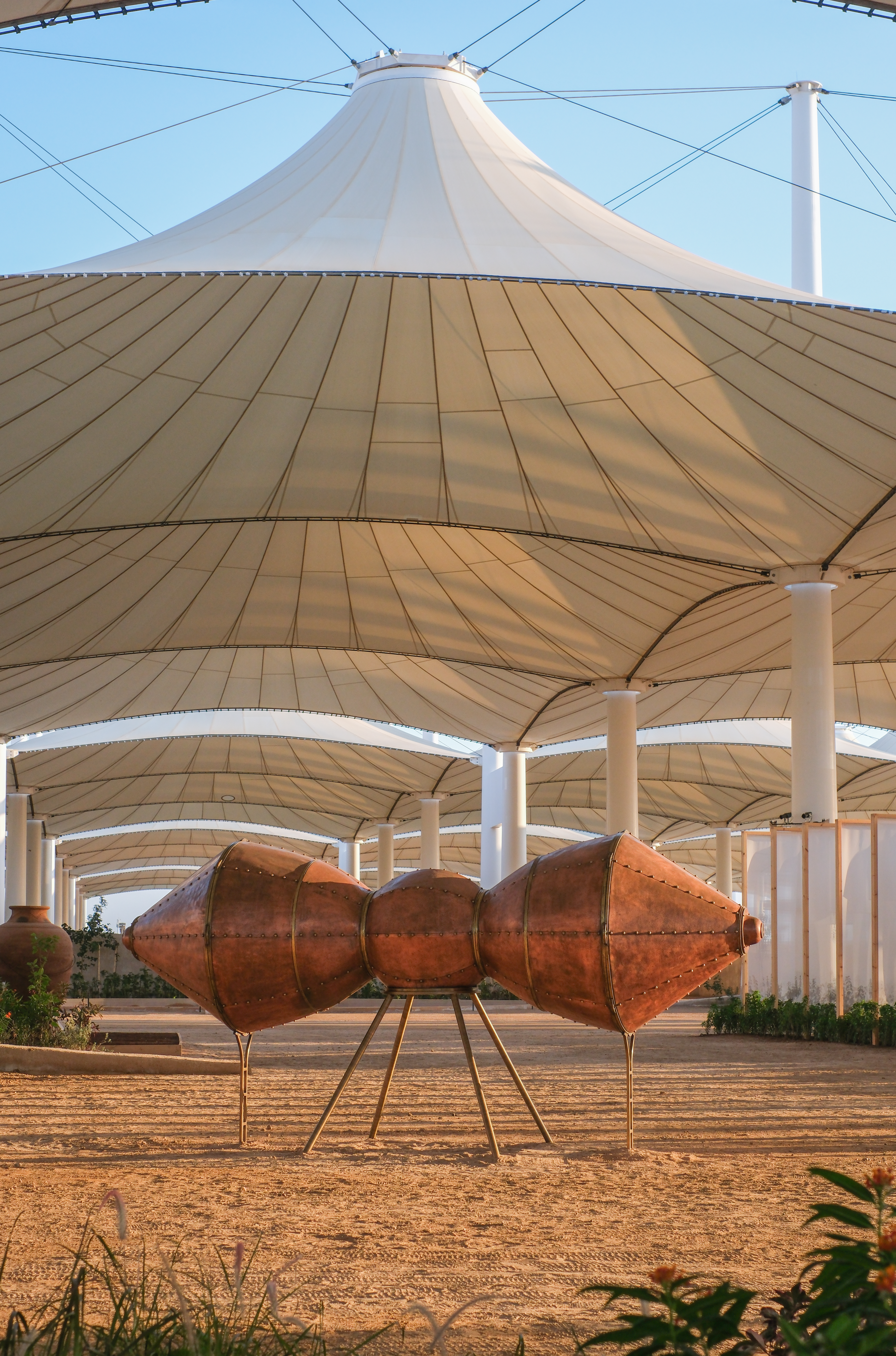
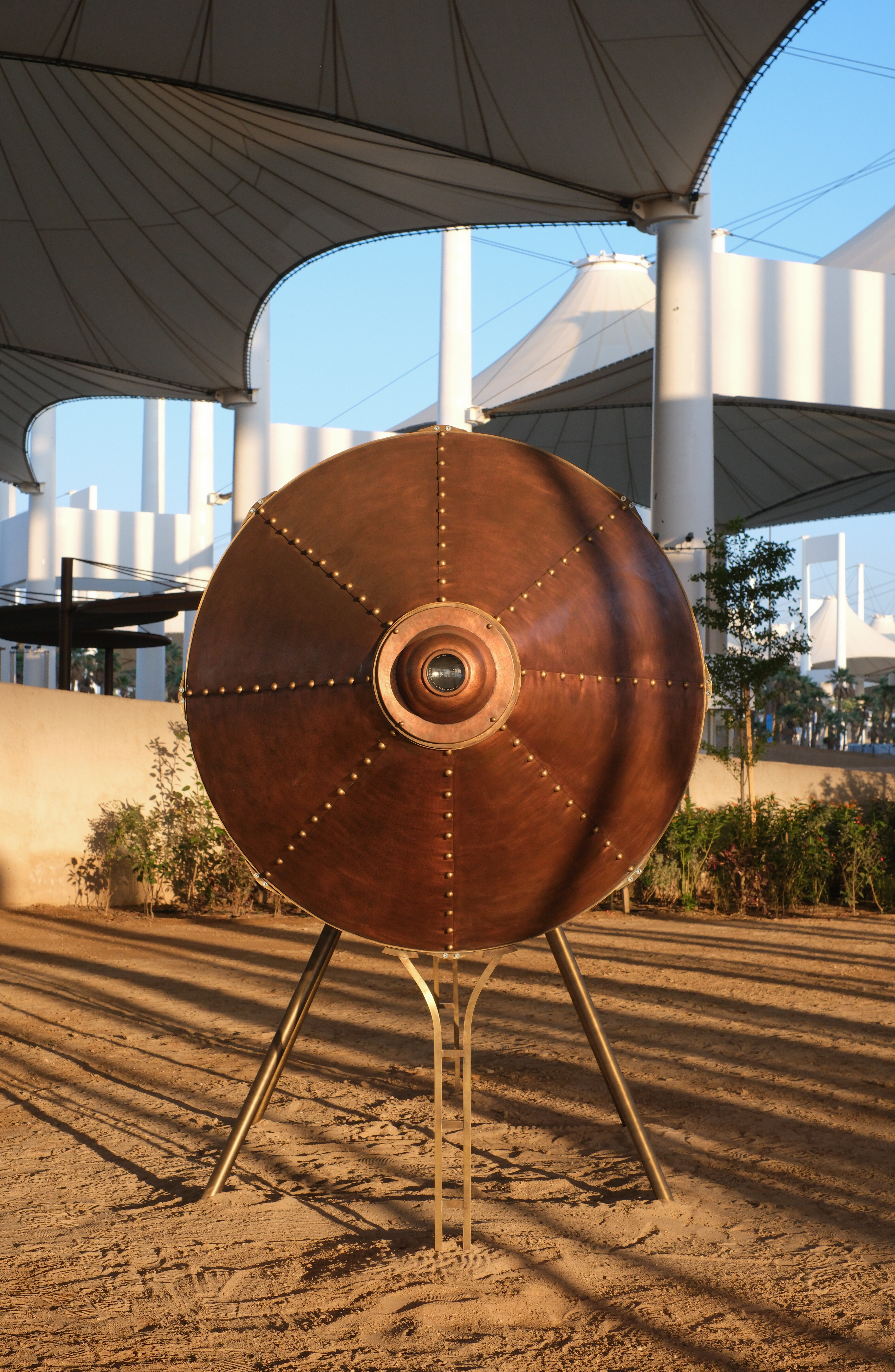
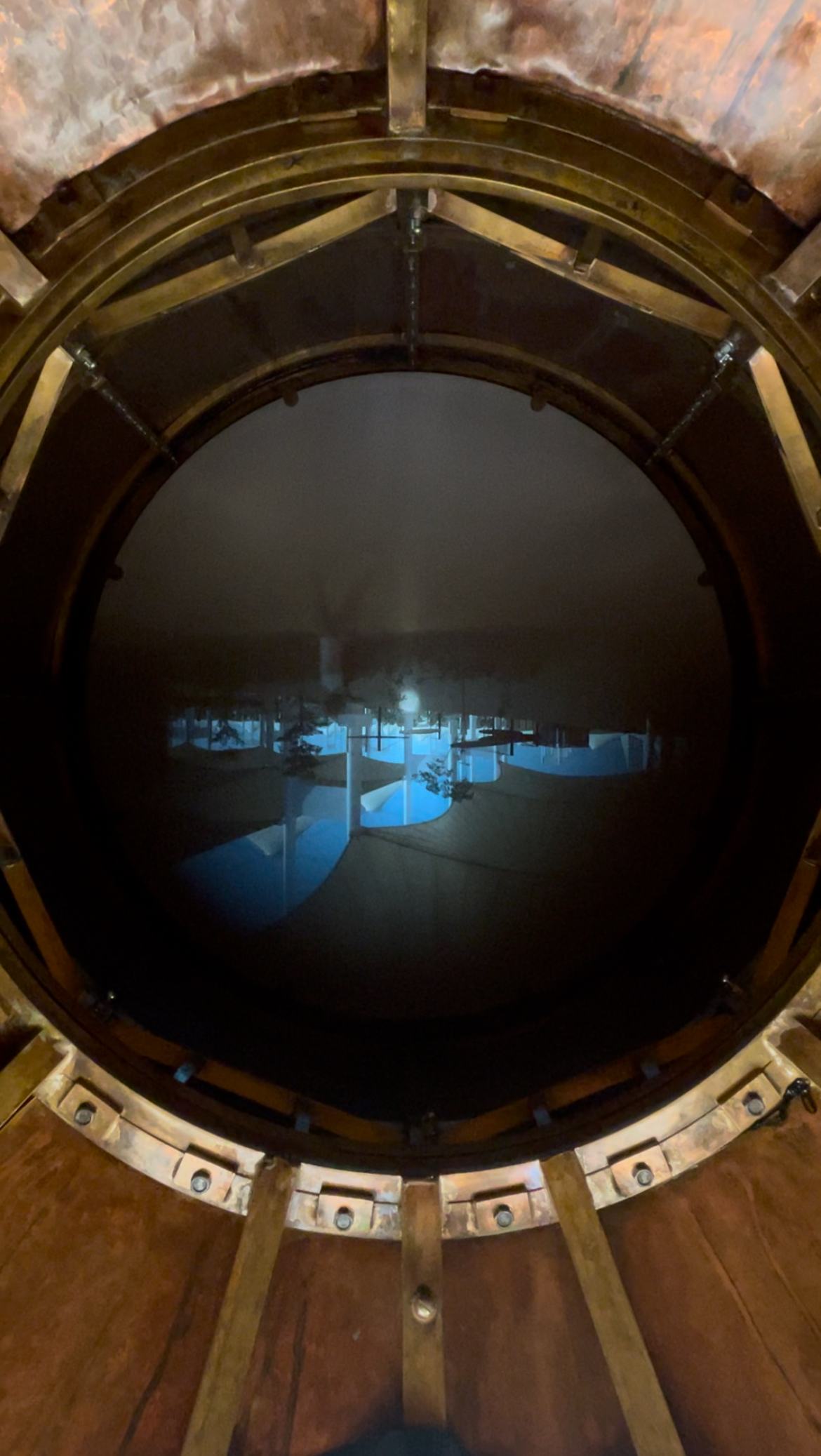
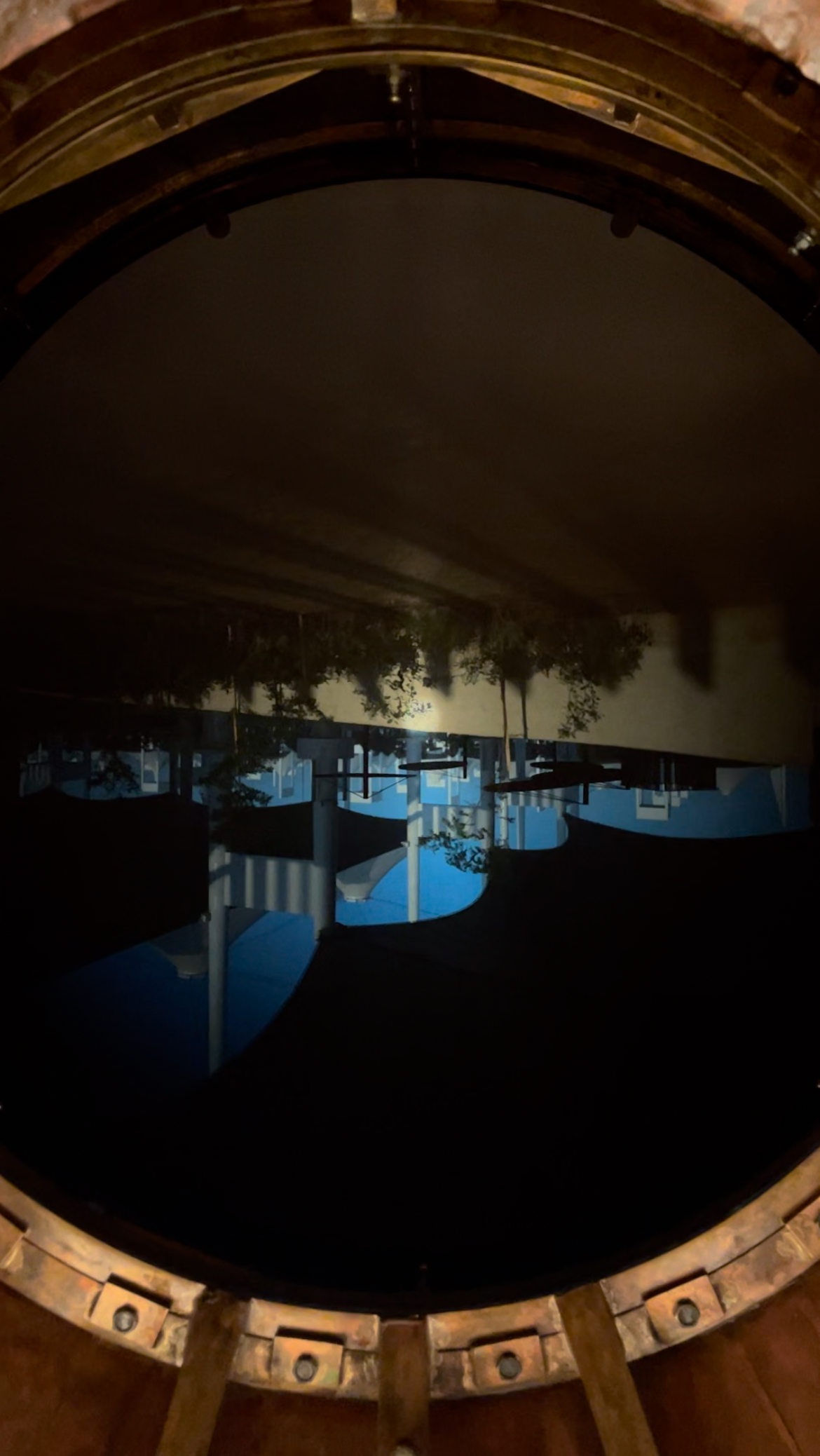
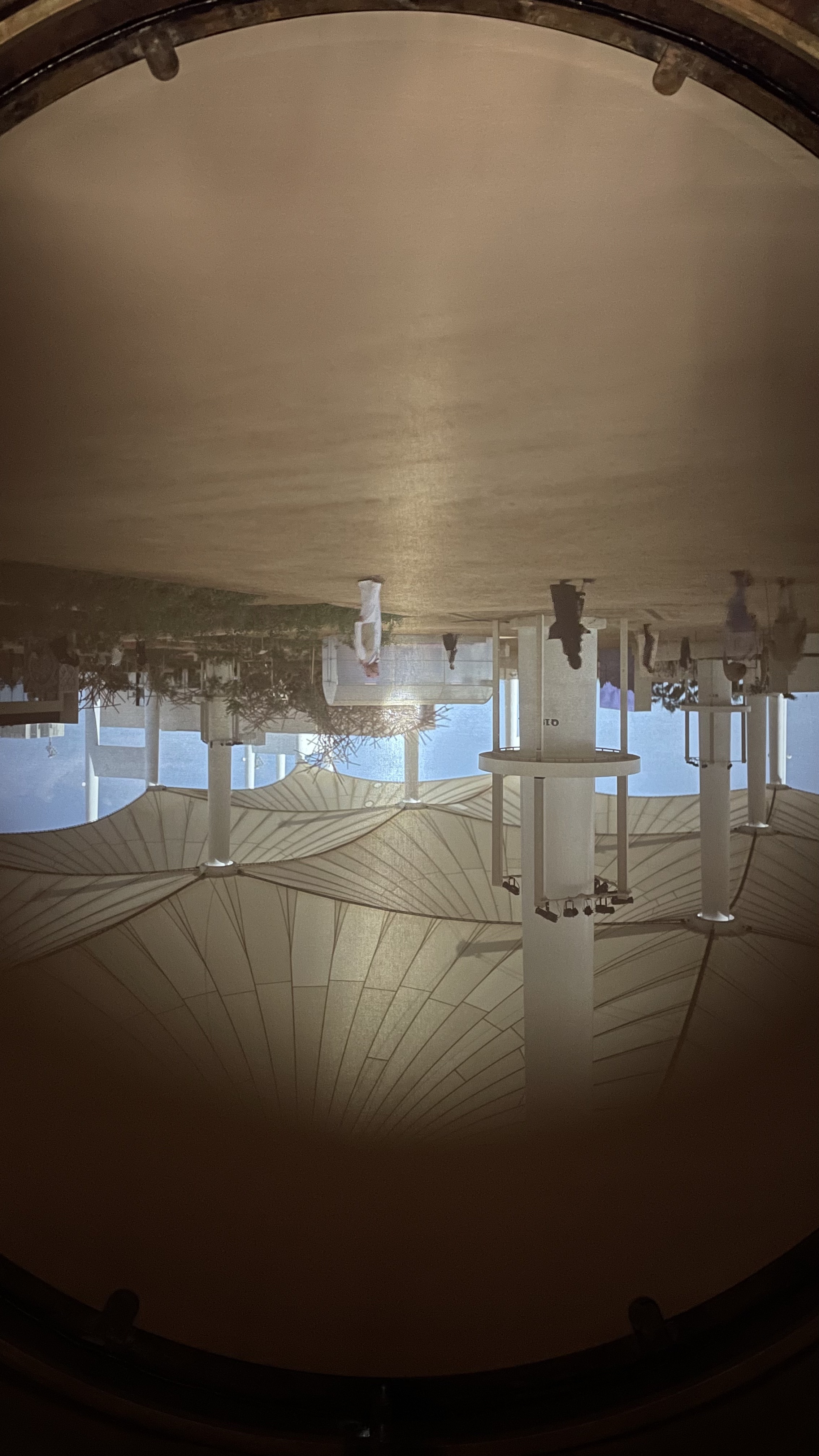
Reflecting on the flood of visual information in the age of the internet, Tamara Kalo’s practice questions humans’ ways of perception. The artwork is a contemporary adaptation of a historic instrument: Ibn Al Haytham’s camera obscura. Realized as a copper sculpture, it enables viewers to contemplate a live image of their surroundings through an upside down projection. The artist pairs Ibn Al Haytham’s discovery, who was also the first to formulate that human vision is a result of light entering the eye and then processed by the brain, with copper crafts popularized during the Abbasid Caliphate (AH 132 - 656/750–1258 CE).
The artwork is an interpretation of the Qur’anic verse from chapter Al-Nur (24:35), in which Allah’s light is described as coming from a blessed olive tree that is neither in the west nor in the east. The two lenses of the camera are located opposite of each other, eastward where the sun rises, and westward, where it sets. The antiquated dichotomy of east and west, Global North and Global South, or up and down, and the illusion of past and future, is symbolically bridged. This act of reversal allows for alternative sensorial experiences and brings awareness to the complex and subjective processes of perception.
في إطار تأمُّلها في تدفُّق المعلومات البصرية في عصر الإنترنت، تستكشف تمارا كالو في ممارستها الفنية طرق الإدراك لدى البشر. يمثِّل هذا العمل الفني صياغة معاصرة لآلة تاريخية؛ وهي الكاميرا المظلمة التي اخترعها ابن الهيثم.
يأخذ العمل شكل منحوتة نحاسية، تتيح للمشاهدين التأمل في صورة حية لمحيطهم، معروضة بصورة مقلوبة. تربط الفنانة بين اكتشاف ابن الهيثم، الذي توصّل إلى أن الرؤية البشرية هي نتيجة لدخول الضوء إلى العين ثم معالجته بواسطة الدماغ، وبين الحِرَف النحاسية التي ازدهرت في العصر العباسي (132-656 هـ/750-1258م).
يشير العمل الفني إلى الآية القرآنية في سورة النور (24:35)، والتي تصف نور الله بأنه يوقَد من شجرة زيتون مباركة، لا شرقية ولا غربية. تقع عدستا الكاميرا مقابل بعضهما البعض، شرقًا حيث تشرق الشمس، وغربًا حيث تغرب. يتجاوز العمل الحدود التقليدية بين الشرق والغرب، أو الدول الغربية وغير الغربية، أو بين الأعلى والأسفل، ويفكّك الفاصل الوهمي بين الماضي والمستقبل؛ ليقدِّم رؤية رمزية ومتصلة بهذه المفارقات والتمييزات. يُتيح هذا الفعل العكسي تجارب حسّية بديلة، ويعمِّق إدراكنا لتعقيدات الرؤية وذاتيّتها.



the green screen line
2024one channel video 37:21 (WIP)
this was a result of the NEOM research residency 2024 that took place between NEOM and Madrid, organized by E&C Neom, Alserkal Advisory and TBA21.
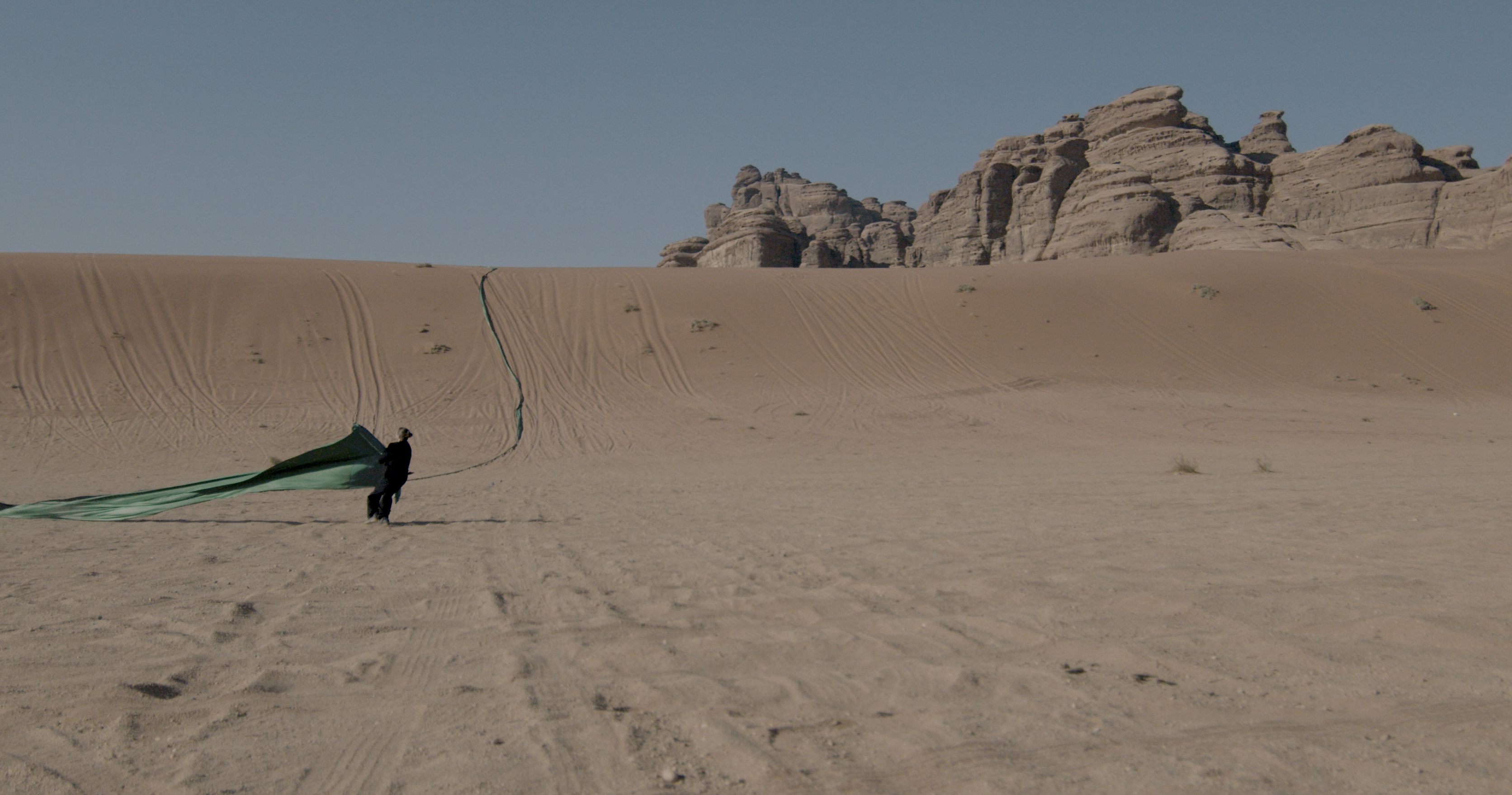
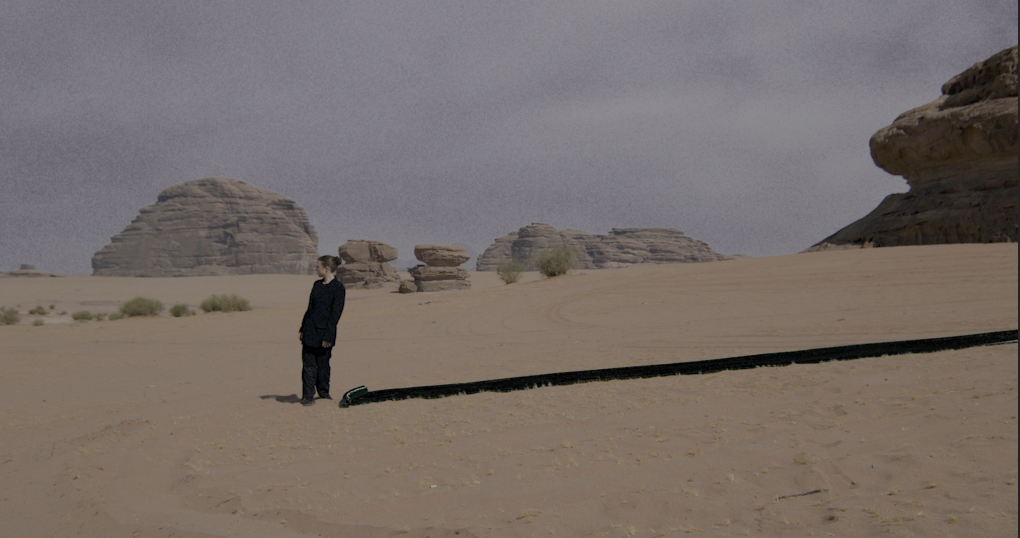
Kalo’s work considers the embodied mapping of land as an archive in the context of NEOM’s natural landscape, both geographically and temporally. The artist explores how bodies have moved through the landscape over time, tracing historic routes, pathways and juxtaposing these with new lines being built for the future.
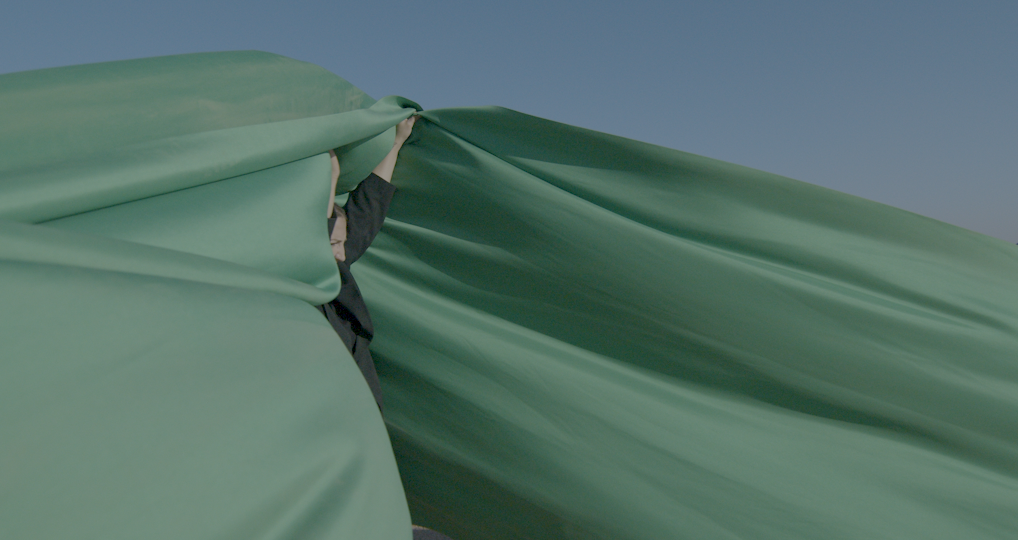
Through the act of unrolling a green fabric—Kalo questions what it means to draw a line in the landscape and how this manifests not just physically but also in the collective imagination. As an embodied gesture, Kalo examines the scale of the human body within the vast landscape and the scale of NEOM’s future construction. By applying a green screen effect to the fabric, it becomes an endless virtual possibility, symbolizing the multiple meanings of mark-making in the landscape.